


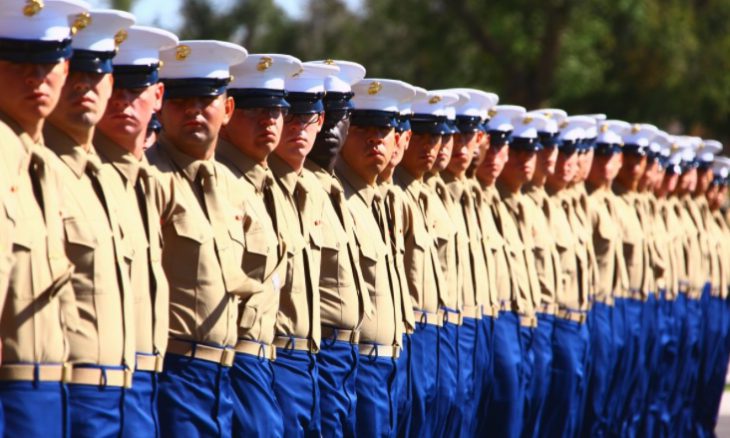
Deterrence, protection, alliances, and the shifting responsibilities of security in a complex world.
PRAY FIRST for our nation’s leaders, in the White House, Congress, and the departments of Defense and Homeland Security to seek God’s perfect wisdom in their decisions.
The prudent sees danger and hides himself, but the simple go on and suffer for it. Proverbs 22:3
The Constitution assigns the federal government responsibility for providing national defense, demonstrating a basic belief that protecting the nation is a central public duty. Yet the meaning of defense has expanded significantly since the country’s founding. Once focused primarily on territorial protection and conventional warfare, today national defense includes deterring conflict, protecting infrastructure, supporting allies, and responding to emerging risks that extend beyond traditional battlefields. The result is a broader understanding of security, one shaped as much by prevention as by response.
At its core, national defense in a constitutional democracy seeks to preserve sovereignty, protect citizens, and maintain stability. These responsibilities extend beyond physical borders to include safeguarding economic systems, communication networks, and other national interests. While military strength is crucial, defense policy increasingly emphasizes preventing conflict before it begins. This shift reflects the recognition that stability often depends not only on strength but also on credibility and preparedness.
Deterrence and the Role of Prevention
Prevention plays a significant role in that effort. By maintaining capable forces and clear commitments, policymakers seek to discourage potential aggression. The objective is not necessarily to use force but to signal that doing so would carry unacceptable costs. Military readiness through training, logistics, and technological capability contributes to this stance even when it is never deployed. Analysts often describe deterrence as successful when conflict does not occur, even though its effectiveness is difficult to measure.
Balancing preparedness with restraint requires careful judgment. Too much emphasis on escalation can increase tensions, while too little preparedness may raise the risk of miscalculation. Lawmakers must then weigh capability alongside communication, ensuring that defensive measures do not unintentionally signal hostility. This balancing act highlights how modern defense policy often operates in a space between vigilance and stability.
Beyond the Battlefield
As threats evolve, the definition of national defense continues to broaden. Cybersecurity now occupies a prominent place in defense discussions, expressing concerns about vulnerabilities in digital infrastructures. Disruptions to energy systems, financial networks, or communications platforms can also create consequences comparable to physical attacks. As a result, protecting cyber systems has become an integral part of national security planning.
Infrastructure and supply chains also shape modern defense considerations. Access to critical materials, transportation systems, and communication networks affects national resilience. Disruptions, whether caused by natural disasters, cyber incidents, or geopolitical tensions, can hinder both civilian life and military readiness. For this reason, political leaders increasingly view resilience and continuity planning as elements of defense rather than solely domestic concerns.
This broader perspective extends to emergencies such as natural disasters and public health crises. The military frequently supports disaster response through logistics, transportation, and coordination capabilities. These missions are typically domestic and humanitarian; however, they highlight how defense resources contribute to stability beyond conflict scenarios. Such roles can shape public understanding of national defense as both protective and supportive.
Alliances further expand the meaning of defense. Partnerships with other nations can strengthen deterrence by signaling shared commitments. Cooperative defense arrangements also enable resource sharing, joint training, and coordinated responses. At the same time, alliances introduce complexity. Shared commitments require consultation and diplomacy, and differing priorities among partners can complicate decision-making. Nevertheless, many analysts conclude that alliances often reduce uncertainty and discourage conflict by demonstrating collective resolve.
Global Stability
Beyond deterrence and alliances, humanitarian assistance represents another dimension of national defense activity. Military forces often deliver aid following disasters, support evacuations, or assist in stabilization efforts. These missions are typically non-combat in nature, yet they influence how defense institutions are perceived. They stress capability, logistics, and coordination rather than simply force.
Emerging technologies are likely to shape defense priorities even further. Artificial intelligence (AI), autonomous systems, and advanced communications tools may change how preparedness is measured and how threats are detected. These developments raise new questions about accountability, oversight, and proportional response. As technology evolves, defense policy must adapt while maintaining a clear understanding about its fundamental purpose.
In the end, national defense today reflects a layered responsibility. It includes prevention, protection of infrastructure, alliance cooperation, and humanitarian support. The challenge is maintaining readiness while preserving stability. This requires not only resources, but also judgment and an understanding that strength can serve peace when exercised carefully.
The Last Year in Action
In 2025 and 2026, the U.S. federal government significantly expanded the Department of Defense’s (DoD) non‑conflict role (sometimes functionally referred to as a Department of War-learn more about the distinction here) through a sweeping restructuring of its civilian workforce and internal governance. The centerpiece of this shift was the Workforce Acceleration & Recapitalization Initiative, which directed every DoD component to overhaul its organizational structure, eliminate redundancies, and ensure that all civilian roles directly supported military readiness, deterrence, or modernization. Although framed as an efficiency effort, the initiative effectively broadened the Pentagon’s authority over how federal civilian work is defined, classified, and executed.
A major part of this expansion involved pushing the DoD into a leadership role in government‑wide technology modernization. New directives emphasized automation, artificial intelligence, and digital‑first operations, giving the department greater influence over federal IT systems and the modernization of administrative processes. These changes were not about combat operations but about reshaping the federal workforce and infrastructure around DoD priorities, which increased the department’s domestic administrative footprint.
Globally, the DoD’s role expanded primarily through non‑combat strategic functions rather than large-scale new deployments. The restructuring aimed to strengthen deterrence, cyber capabilities, and space operations by reallocating personnel and streamlining internal processes. In recent weeks, the United States has engaged militarily with Iran, marking a departure from a purely preventive posture; however, these actions have remained limited in scope and integrated within a broader effort to deter escalation rather than initiate sustained war. U.S. involvement in the Middle East has combined targeted engagement with posture, presence, and alliance coordination to signal resolve while attempting to prevent wider conflict. The emphasis on “decision velocity” and reduced bureaucracy effectively increased DoD’s influence over U.S. strategic positioning worldwide and its ability to act quickly and assertively when necessary.
Finally, the initiative’s planned reduction of 50,000-60,000 civilian positions and consolidation of overlapping offices further centralized authority within the Pentagon. By reshaping the civilian workforce and outsourcing certain functions, the DoD gained greater control over federal labor structures and mission alignment. Taken together, these changes expanded the department’s domestic and global influence not through military operations, but through structural, technological, and administrative reforms that positioned the DoD as a more dominant actor across multiple areas of federal governance.
Why It Matters and How We Can Respond
National defense is often viewed as a distant policy area, but it does shape how governments assess risk, cooperate with others, and prepare for uncertainty. These choices influence how resources are allocated, how risks are assessed, and how nations cooperate. Even when unseen, defense policy forms part of the broader environment in which communities live.
Scripture reminds us, “The prudent sees danger and hides himself, but the simple go on and suffer for it” (Proverbs 22:3). This proverb does not celebrate fear but commends attentiveness, recognizing risk while seeking a wise response.
Practically, this may involve learning from reputable sources and approaching discussions with patience. Defense policy often involves complex trade-offs, and simplified narratives rarely capture the entire picture. Listening carefully and asking clarifying questions can help nurture conversations that remain constructive.
Prayer also shapes perspective. We can pray for godly discernment among leaders responsible for decisions that carry significant consequences. We can pray for those serving in roles related to defense and disaster response. And we can ask for wisdom in our own conversations, that they reflect clarity without harshness.
“Blessed are the peacemakers, for they shall be called sons of God” (Matthew 5:9). National defense, at its best, seeks to preserve peace through preparedness. Citizens contribute not by directing policy but by fostering conversations marked by thoughtfulness and restraint.
HOW THEN SHOULD WE PRAY:
— Pray for wisdom in balancing strength and restraint.
Who is wise and understanding among you? By his good conduct let him show his works in the meekness of wisdom. James 3:13
— Pray for peace-oriented leadership and cooperation.
If possible, so far as it depends on you, live peaceably with all. Romans 12:18
CONSIDER THESE ITEMS FOR PRAYER:
- Pray for our leaders entrusted with overseeing and administering our nation’s defense, that they would seek wisdom and uphold their duties with care.
- Pray for understanding in public conversations about national security.
- Pray for members of the U.S. Armed Forces and for their families.
Sources: Cybersecurity and Infrastructure Security Agency, Congressional Research Service, North Atlantic Treaty Organization, U.S. Department of Defense, Congress.gov, RAND Corperation
RECENT PRAYER UPDATES