

The pursuit of freedom and how it has shaped a nation.
PRAY FIRST for all Americans to reflect on the milestones of our past to understand the cost, responsibility, and restraint of creating and maintaining the freedoms we cherish.
For you were called to freedom, brothers. Only do not use your freedom as an opportunity for the flesh, but through love serve one another. Galatians 5:13
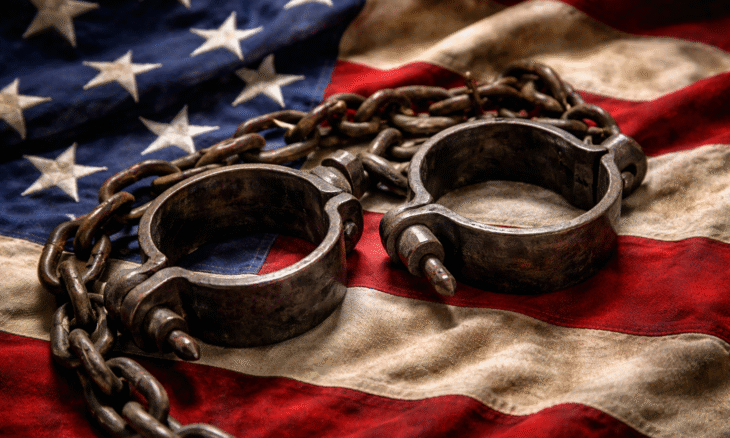
Each year, National Freedom Day kicks off the month of February by commemorating February 1, 1865, when Congress passed, and President Abraham Lincoln ceremoniously signed, the joint resolution proposing the Thirteenth Amendment, the measure that marked the beginning of the end of slavery in the United States.
At its core, National Freedom Day commemorates the beginning of a legislative decision as part of a transitional period in American history. The resolution signed that day began the constitutional process, and the ongoing effort to heal a nation following the Civil War while maintaining and securing the equality it established. By the end of the process, an irreversible legal line was formed: slavery, once embedded in law and economy, would no longer be sanctioned by the Constitution.
The Thirteenth Amendment abolished slavery and set a constitutional foundation for future legal and civic progress. Later efforts, including Reconstruction and civil rights legislation, grew from that framework. Honoring the legacy of February 1 reminds us that freedom in America is not a single historical moment but part of an ongoing process, shaped by generation after generation.
Remembering the Legacy
National Freedom Day itself was established in 1948 following the advocacy of Major Richard Robert Wright Sr., a formerly enslaved man who believed the nation needed an annual moment to reflect on emancipation as a living inheritance, not merely a historical milestone.
What distinguishes February 1 is its focus on the constitutional process. On that day, President Abraham Lincoln signed a joint resolution adopted by both the House and Senate proposing what would become the Thirteenth Amendment. The action didn’t grant immediate legal effect; instead, it initiated the formal amendment process outlined in the Constitution. By moving abolition from executive action into constitutional law, Congress and the presidency committed the question of slavery to a permanent legal framework rather than to wartime authority alone.
National Freedom Day centers on remembrance rather than agreement. It does not demand consensus about the nation’s history or the evolving meanings of freedom. Instead, it focuses on a precise legislative act, the congressional approval of the Thirteenth Amendment, which placed the abolition of slavery within the Constitution itself. By doing so, it bound future generations and limited future governance.
The observance honors this pivotal constitutional step, the moment when a moral conviction became a legal mandate. It marks the transformation of abolition from principle to enforceable law—an action requiring state ratification and shaping every administration that followed. In this way, National Freedom Day anchors the nation’s ongoing pursuit of freedom in a concrete decision that continues to guide American life.
As the U.S. celebrates its 250th year, February 1 offers a measured historical reference point. This resolution initiated a constitutional change whose effects would extend beyond the immediate moment. Although the Thirteenth Amendment did not address every consequence of slavery, it established a legal framework that following generations would operate within and be accountable to.
Why It Matters and How We Can Respond
As believers, we see historical moments like February 1 within a broader biblical pattern: freedom established by law, sustained through practice, and shaped over time. Scripture speaks less often about freedom as declaration and more about how it is carried forward—sometimes unevenly—across generations.
Remembering February 1 places the Thirteenth Amendment within a longer constitutional and legal process, rather than as a single, self-executing event. Scripture often frames freedom in terms of restraint and accountability rather than autonomy (1 Corinthians 6:12).
This remembrance can shape how we engage in public life today: with patience rather than triumphalism, with truth rather than slogans, and with humility that recognizes how easily freedom can erode when it is assumed rather than tended.
HOW THEN SHOULD WE PRAY:
— Pray all federal leaders to seek godly wisdom in preserving freedom through lawful and ethical means, especially when doing so is costly. Give me understanding, that I may keep your law and observe it with my whole heart. Psalm 119:34
— Pray for those in authority to act with humility as we reckon with the unfinished work of the grand American experiment. The end of a matter is better than its beginning, and the patient in spirit is better than the proud in spirit. Ecclesiastes 7:8
CONSIDER THESE ITEMS FOR PRAYER:
- Pray for all Americans to reflect on the actions of the past, remembering that liberty and freedoms are not guaranteed, but must be worked towards.
- Pray that those who lead government agencies to seek God’s guidance on how to continue to create a government that serves all its people.
- Pray for God’s hand to be on the nation in order that we may act according to His perfect will.
Sources: Truman Library Institute, National Park Service, Library of Congress, National Archives, DocsTeach.org,
RECENT PRAYER UPDATES